
From the Bishop
Dear friends,
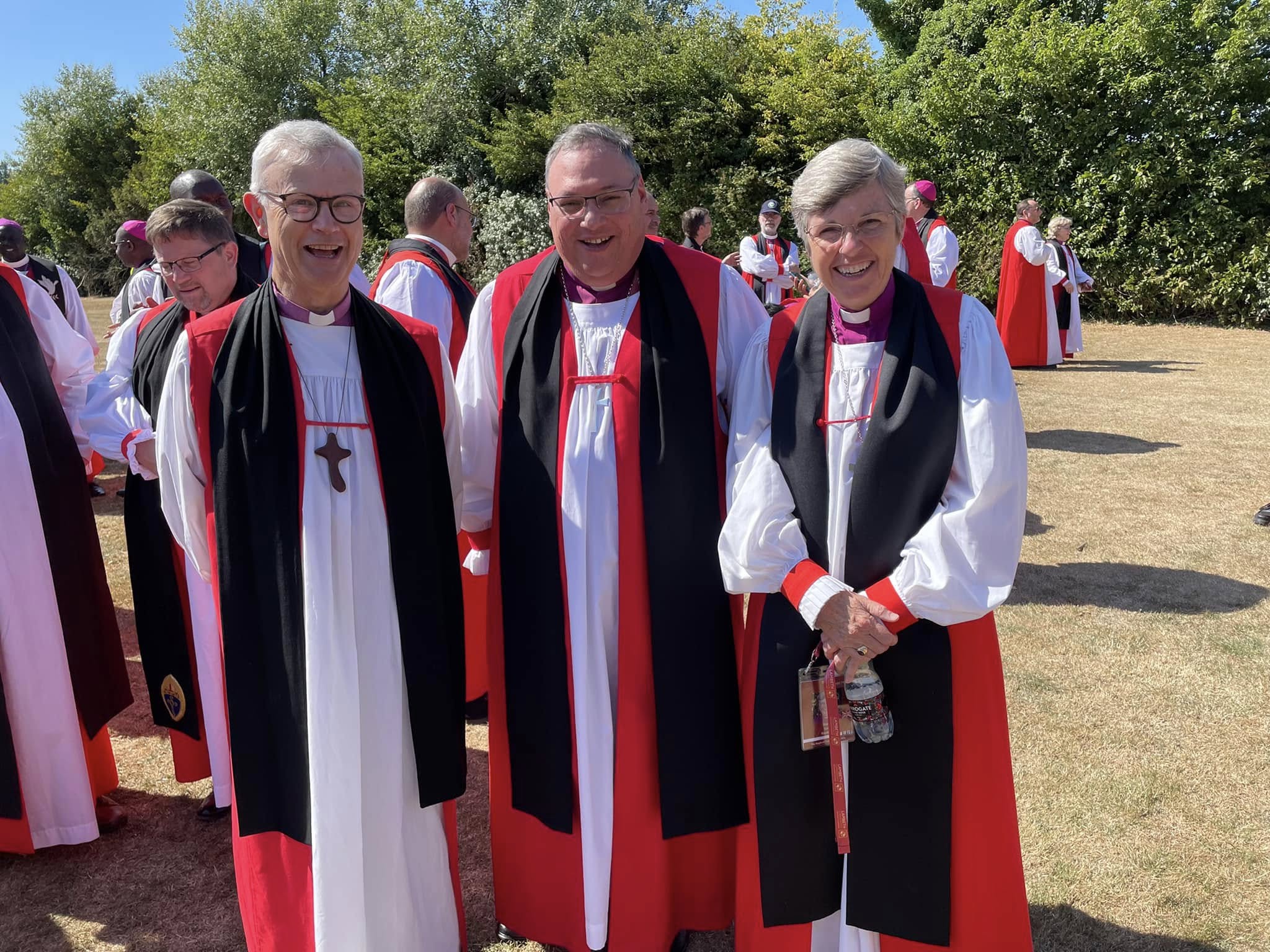
At every Lambeth Conference, the gathering of bishops from across the Communion, there is a photograph taken of all attendees. It is quite an event, taking most of the afternoon.
At recent conferences, there has been a second photograph taken, this time of the bishops who are women. My heart was filled with great joy when that photo was taken in 2022.
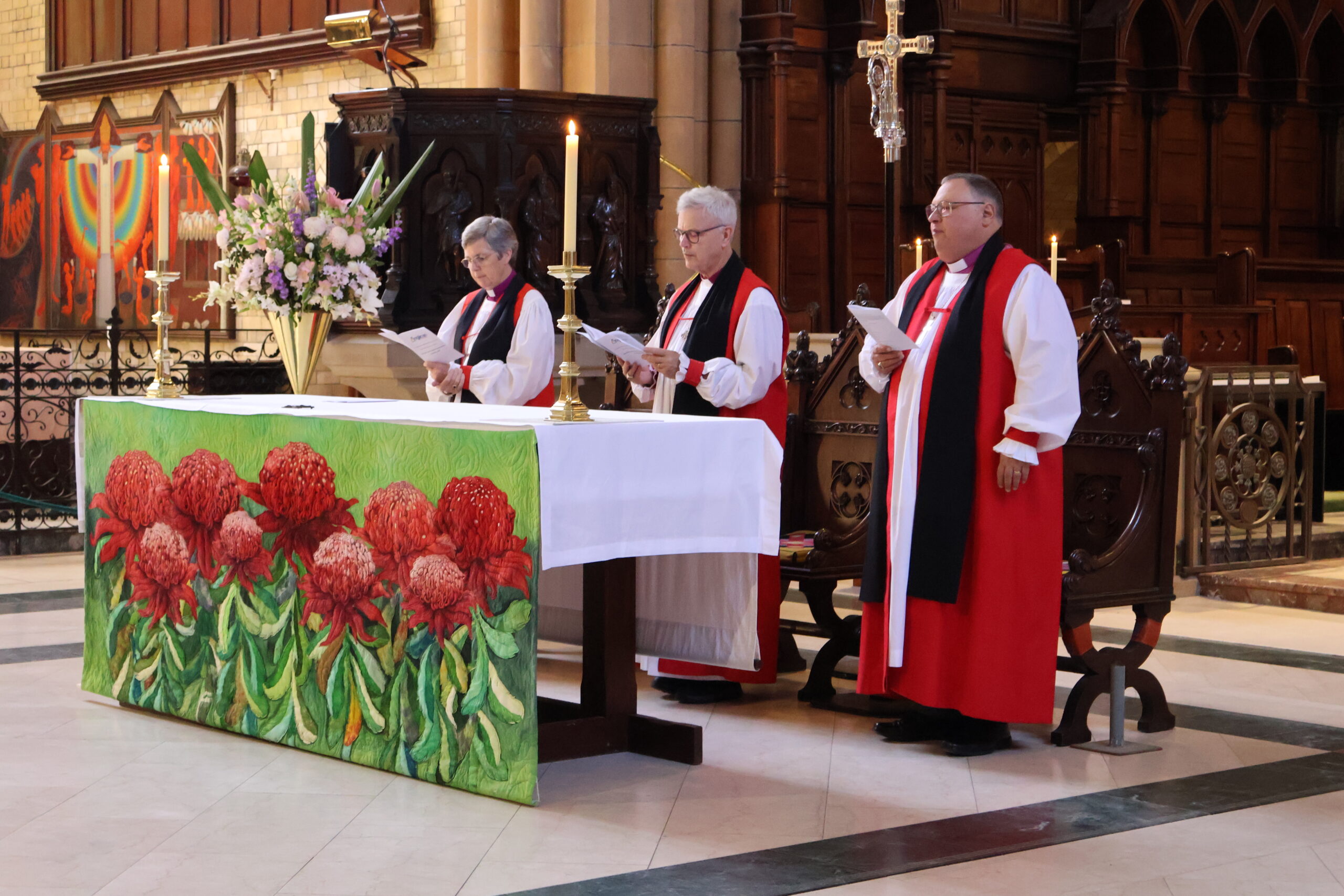
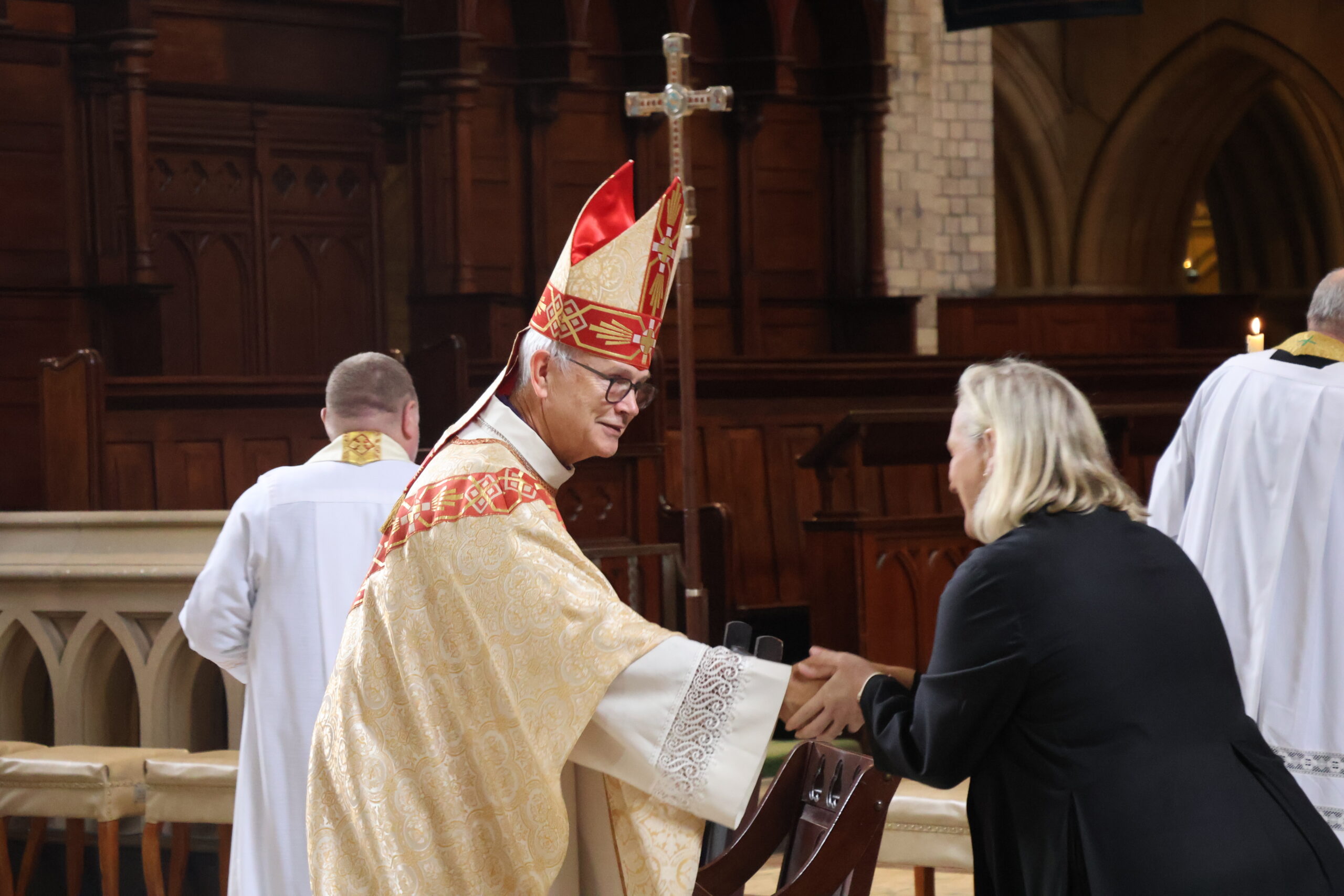
Bishop Sonia, Bishop Charlie and I recently had the amazing privilege of joining in the consecration of a bishop for the Anglican Church of Australia. Tiffany Sparks has begun her ministry as the Assistant Bishop of Grafton.
The Anglican Communion began exploring opportunities for women in teaching and pastoral work in 1855 in the United States, when the first Deaconess was set apart for ministry. It has been a long and complex journey since then. In Australia, women were ordained as deacons in 1987, priests in 1992, and bishops in 2007. Women had been set apart as deaconesses prior to 1987.
The first woman to be ordained a priest in the Anglican Communion was Florence Li. Bishop Ronald Hall ordained her in China in January 1944.
Hall was criticised for his actions, which he saw as responding to a pastoral need. Li was theologically trained and had led her church for four years.
The Synod of the Diocese of Hong Kong and Macau responded to the criticism, indicating it believed that God was using “China’s age-long respect for women, and traditional confidence in women’s gifts for administration and counsel, to open a new chapter in the history of the church.” 1 The synod held that the discrimination against Li was unjust and unscriptural.
Li ceased ministering as a priest in 1946. Her church was closed, and she experienced significant persecution when communism swept China.
There was significant debate in the Anglican Communion in the following years. This culminated in the 1968 Lambeth Conference affirming that “there was no valid theological objection to the ordination of women.”
In 1971, the Province of Hong Kong again ordained women, this time with a clear mandate from the Anglican Consultative Council. The Anglican Communion, through its instruments, resolved to accept that its provinces would move at different rates and in different ways in relation to the ordination of women as priests.
Just recently, Newcastle Anglican held an International Women’s Day event where we were reminded that 78% of our workforce comprises women.
As a Diocese, there is no impediment to women or men being called and appointed to any leadership role.
In taking this stance, we are deeply informed by the scriptures. Again and again, I return to the stories in John’s Gospel of the woman at the well and Mary Magdalene on the day of resurrection. The New Testament witness shows women in profound leadership and ministry roles. This invites us to revisit the Old Testament and refresh our understanding of what God has done through time. This week, we are being reminded of Deborah.
Every blessing,
Bishop Peter Stuart
Anglican Bishop of Newcastle
Gilbert Valentine (2013) Andrews University Seminary Studies, Vol. 51, No. 2, 219-26

Deborah

By Bishop Sonia
The peasantry prospered in Israel;
they grew fat on plunder,
because you arose, Deborah,
arose as a mother in Israel. Judges 5.7
JUDGES IN ISRAEL
The Old Testament Book of Judges gives an account of Israel’s life prior to the establishment of the Monarchy. In this time, which follows the death of Joshua, God appointed Judges to rule over the people. These Judges were to serve as the people’s leaders, judge between them with wisdom, and (when necessary) lead them into battle.
The period of the Judges covers about 200 years. Scholars vary on the dates, but we might think of this period as falling between something like 1250 to 1050 BCE. Over these years there were twelve judges. Six were Minor Judges, about whom we know little more than their names: Shamgar, Tola, Jair, Ibzan, Elon and Abdon. The other six, the Major Judges, are names we might be more familiar with: Othniel, Ehud, Deborah, Gideon, Jephthah and Samson.
These six Major Judges were
… renowned for their brave exploits in battle. They were leaders who arose in times of great need and led the tribes to victory in battle because God had marked them out charismatically. They guided the tribes during the rest of their lifetimes. Because of their recognised authority, they exercised power in legal disputes between tribes and in political squabbles.i
DEBORAH – THE TEXT
The story of Debroah, one of these Major Judges, is told in Judges 4 and 5. These texts themselves are interesting.
Judges 5 is a poem, said to be sung by Deborah, but on reading it we may wonder whether to it was actually sung about her rather than by her, proclaiming as it does her great works. This poem is one of the oldest complete narratives in the Bible.
Judges 4 is then a prose narrative of Deborah’s reign, which scholars agree is based on this poem. It differs slightly in content, reflecting a later view and style.
DEBORAH – PROPHET AND JUDGE
We learn from these texts several things about Deborah:
- She was the wife of Lappidoth, though that is all we know of him (4.4).
- She “arose as a mother in Israel” (5.7).
- She was the fourth judge in Israel.
- She would sit under a Palm Tree between Ramah and Bethel, where people would come to her for judgement/wisdom (4.4).
- We can infer that she ruled for 40 years and that much of this time was peaceful (5.31).
- We can infer that she had extraordinary courage and deep trust in God (eg 5.12, 4.8-9).
Deborah is “one of the most remarkable figures in the Old Testament, known for her roles as a prophetess, a judge, and a leader of Israel during a time of oppression”.
Richard Brewer writes well of her:
Deborah is a charismatic leader, as were all the judges. But she is more than a Judge: she is a prophetess. The judge was inspired by the spirit of YHWH to rule and to lead into battle when necessary. A prophet or prophetess was inspired also, but with special power to speak the word of YHWH to his people. Deborah, as prophetess, acts in a way similar to that which we see in the story of Samuel: she commissions Barak to lead the army against the enemy; moreover, she does so in the name of YHWH.ii
DEBORAH, BARAK, AND JAEL, AND WAR AGAINST SISERA
During her time as Judge Deborah appointed Barak to lead his people in battle against Sisera and his army. Barak was clearly afraid and said that he only lead the battle if Deborah went with him. In thinking about the time, this seems like an extraordinary request, as does Deborah’s agreement. We tend to think of the men going to war, and yet here is Deborah, a female judge, leading the Israelite army!
Deborah has the last word on this when she replies to Barak that she will go with him, “Nevertheless, the road on which you are going will not lead to your glory, for the Lord will sell Sisera into the hand of a woman.” (4.9)
This is indeed what happens – the battle is fought, Sisera is defeated, as Judges 4 and 5 tell, and then while his army is being pursued Sisera flees on foot, seeking shelter with Jael:
Most blessed of women be Jael,
the wife of Heber the Kenite,
of tent-dwelling women most blessed.
Water he asked, milk she gave;
she brought him curds in a lordly bowl. (5.24-25)
But then, as Sisera sleeps, Jael drives a tent peg through his skull (5.26 and 4.21), and so a woman wins victory for her people, just as Deborah prophesied. Indeed, the song of Deborah in Judges 5 is then unique in that it celebrates a military victory won by two women: Deborah, the prophetess and Jael, the warrior.
DEBORAH AND US.
Here, in some of the Bible’s earliest literature, is the account of a remarkable women leading her people. She is noted for her wisdom and courage, but more important than these is her faith and trust in God. This is clear to those around her, people such as Barak, who will not go into battle unless she goes alongside him, leading the people. Deborah is an early example of women leading or inspiring others in Scripture, a tradition we must not lose.
Finally, I asked Google what we can learn from Deborah today and thought the answer was spot on:
Deborah, as a prophetess, judge, and leader in the Bible, can encourage Christians today to arise as leaders in their generation, trusting in God’s power over fear. She would urge believers to step out of comfort zones, act with boldness against evil, and lead by example while giving God the glory.
Lawrence Boadt, Reading The Old Testament. Paulist Press. 1984.
Richard Brewer, Education for Ministry notes. University of the South, Sewanee. 2002.
Points for Prayer

By Bishop Peter
In a world racked by war, pray for the safety of all people – especially women and girls. Pray that combatants will not resort to acts of violation.
In a world where human rights are denied in many regions, pray that all people will have access to education – especially women and girls. Pray that national leaders will recognise the good that comes from the opportunity to learn and work.
In a world where harm still dominates, pray that homes will be safe places -especially for women and children. Pray for programs aimed at the prevention of domestic and family violence.
Offer thanksgiving for the women of faith, past and present, who draw us nearer to God and deepen our understanding of God’s love.
Teaching on Prayer

One of the things we learn from Asian and Indian cultures is that our faith can have an embodied form. While this comes mainly from non-Christian traditions, we see that through Tai Chi and yoga, people come to a different understanding of themselves as they adopt different postures. We also learn from those traditions, and from neuroscience, that body movement can have a significant impact on wellbeing. Movement has a significant soothing effect.
Different parts of the Anglican Church have different comfort levels with embodied prayer practices. Some are comfortable raising their hands in praise when singing. Others are comfortable bowing or genuflecting as they prepare to receive the sacrament of Holy Communion. Some make the sign of the cross. Many will kneel, if they are able, at significant times of reflection or prayer.
Even tapping your toes as a hymn is sung – bringing ourselves physically to prayer – can enrich our capacity to reflect and enable us to focus more fully on what is being prayed.
Help us build the community

We would love to hear your stories of prayer. Please send them to [email protected]