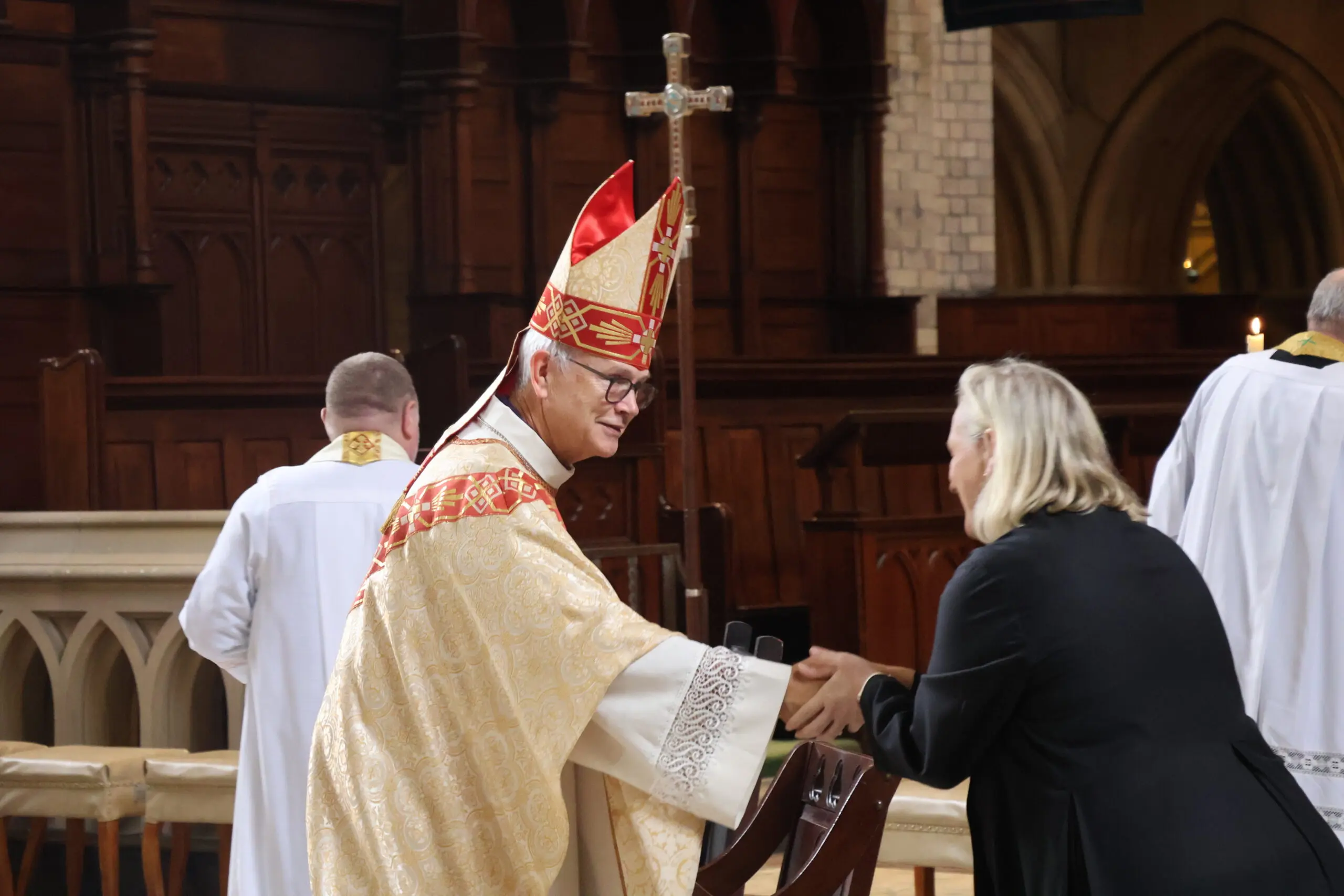

From the Bishop
Dear friends,
Whenever I give a testimony, I am conscious that there are many people in my life story who were there at the right time to make a difference.
Their kindness and graciousness were part of preparing my heart and mind to be able to hear and receive the message of hope proclaimed by Christians that I later met.
Christians who invited me to explore attending church and were patient with me as I wrestled with what I was hearing.
My testimony is of a God who was working to help me to know him more dearly.
I take very seriously the moments of inspiration where I have a sense of surprise at any idea. It might be a person for a ministry, the need to give someone a call, an idea for an address, or a way of solving a curly problem.
God will use others to reach to us. God will use us to reach to others.
In this edition we are taken to one of the surprise encounters in the Acts of the Apostle.
As you reflect, how might you speak of God’s action in your life? How is God surprising you?
Grace and peace,
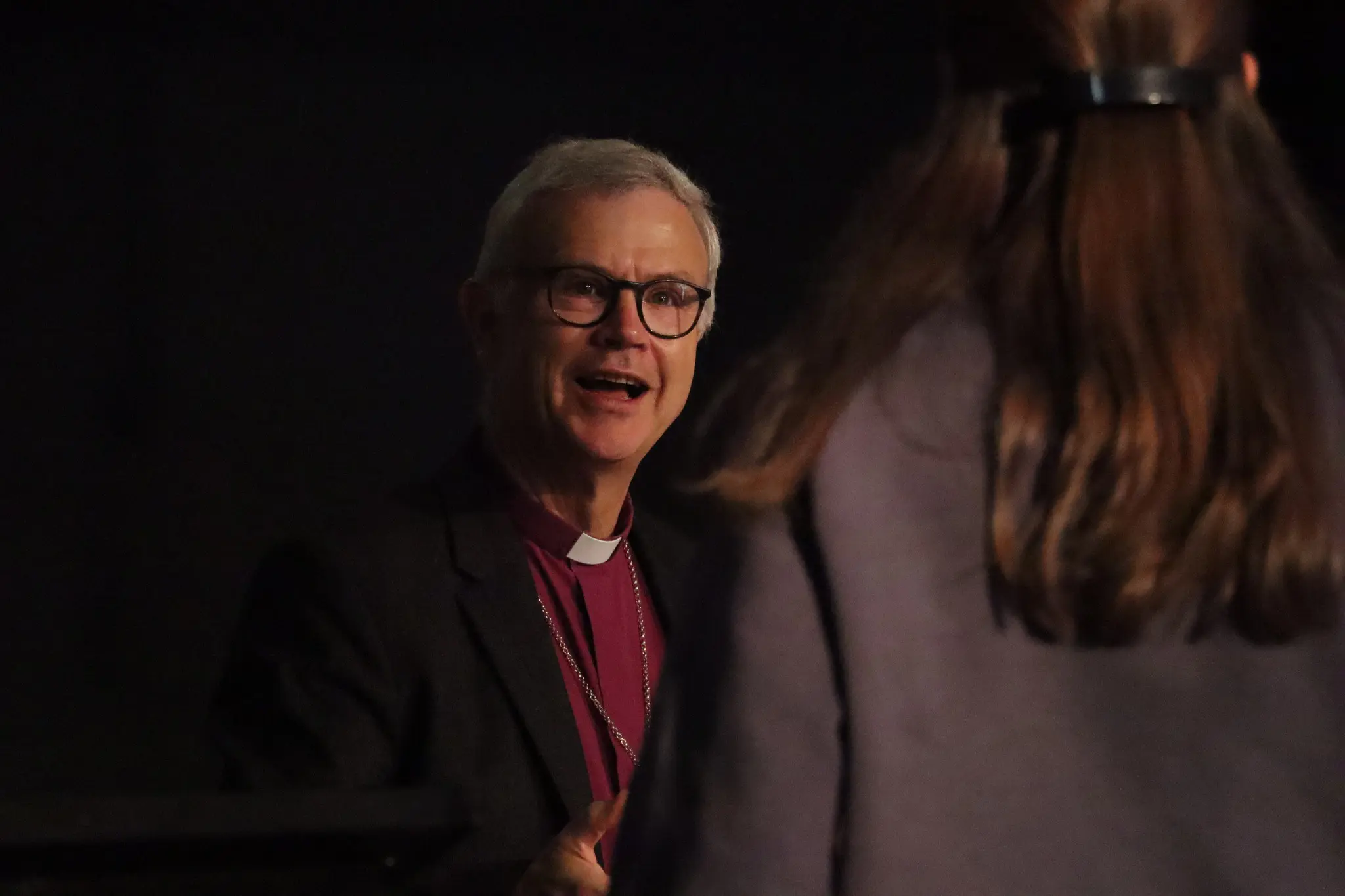
Bishop Peter Stuart
Anglican Bishop of Newcastle
Bible reflection: Acts 10

By Bishop Peter
It is God’s desire that all creation is reconciled with God through Jesus Christ. God, therefore, is active in drawing us into relationship. God, in love, is seeking to move us to say yes to God’s abundant grace. Sometimes God acts in ways that challenge our assumptions about who God is drawing into relationship and what God is asking of us.
We see this playing out in Acts 10. In this section of the book, we are taken to one of the significant moments in the life of the first Christians.
The earliest followers of Jesus were Jews, shaped by the Scriptures, traditions and practices of Israel. As the good news spread, questions were emerging about whether those who were not Jews must observe Jewish laws when they became Christian.
God was making clear that the good news of Jesus Christ was for all people. We learn of a God who “shows no partiality, but in every nation anyone who fears God and does what is right is acceptable to God.”
There are at least two important things to hold together as we read the Acts of the Apostles. We see the vibrant action of the Holy Spirit among the first Christians as the Church comes to understand more fully the good news of Jesus Christ. These were foundational moments in the life of the Church, and Christians ever since have been living into what was learnt at the time.
At the same time, we recognise that God continues to act today. The Holy Spirit continues to engage with people, challenge our assumptions and draw us into a deeper understanding of what it means to follow Jesus. We are invited to be attentive to what God is doing.
In the story, we meet Cornelius, a Roman centurion, likely a commander of 100 troops. He is already responding to God. He has inspired and led his household to do the same. He shares his money generously and takes every opportunity to pray. As the story unfolds, we recognise that Cornelius and his household are not baptised. Yet God is already at work in their lives.
Peter is growing in his apostleship. He also is devout in his prayers. On this day, as he prays, he enters a trance, has a vision and hears a voice three times. He recognises that God is speaking to him. The vision challenges Peter’s understanding of the Jewish food laws. It is a huge challenge for Peter because he has always obeyed them. He is puzzled by what he has seen and is trying to understand what God is showing him.
It is God’s intention that Cornelius and Peter meet. One of the major turning points in the story is when Peter says to Cornelius and the assembled people, “You yourselves know that it is unlawful for a Jew to associate with or to visit a Gentile; but God has shown me that I should not call anyone profane or unclean.”
Peter has come to understand that the vision was not simply about food. God was challenging his understanding of people and of who could belong among God’s people.
I love this text because we are taken into the prayer life of both men and we are invited to see Peter as a reflective person. He has been puzzled by his vision and by the call of God. We see the deep faithfulness of them both. Each is growing in wisdom, maturity and faith.
There is something important in recognising that God is at work in both men. Cornelius is being drawn into a fuller understanding of Jesus Christ. Peter, who has already given his life to following Jesus, is being drawn into a fuller understanding of God’s purposes. Peter comes to teach Cornelius, but he also has something to learn. His faithfulness to God has not changed, but his understanding of what that faithfulness requires is changing.
Peter then teaches the household that Jesus is the Lord of all. He speaks very personally as a witness to the resurrection. He says, “They put Jesus to death by hanging him on a tree; but God raised him on the third day and allowed him to appear, not to all the people but to us who were chosen by God as witnesses, and who ate and drank with him after he rose from the dead.”
Peter goes on to proclaim that everyone who believes in Jesus receives forgiveness of sins through his name. The good news is not confined to one nation or people. Jesus is Lord of all.
In a very dramatic turn, while people are still listening to Peter, “the Holy Spirit fell upon them”. They begin speaking in tongues and praising God. Those who have accompanied Peter are astonished that the gift of the Holy Spirit has been poured out even on the Gentiles.
It is important to recognise the order of events. The Holy Spirit comes upon Cornelius and his household before they are baptised. God has acted before Peter, and the other Christians have determined what should happen.
Peter then asks, “Can anyone withhold the water for baptising these people who have received the Holy Spirit just as we have?” He orders that they be baptised in the name of Jesus Christ.
When Peter is later challenged about what has happened, he explains the events to the believers in Jerusalem. He recalls the words of Jesus and the gift of the Holy Spirit. He asks, “If then God gave them the same gift that he gave us when we believed in the Lord Jesus Christ, who was I that I could hinder God?”
It is a remarkable question.
Peter has been faithful to God throughout his life. He has been shaped by the Scriptures and the practices of his people. He has followed Jesus and witnessed the resurrection. Yet God is still teaching him. God is still challenging his assumptions and drawing him into a deeper understanding of the gospel.
We are invited to recognise that God is already at work in the lives of people. We are invited to be prayerful and reflective, attentive to the Holy Spirit and willing to have our understanding challenged. We are also reminded that this discernment takes place within the life of the Church, as we listen to one another and seek to remain faithful to Jesus Christ.
Prayer Teaching

By Bishop Sonia
Acts 10 focuses on the voice of God coming to Peter for a dream. This idea of God speaking (or not) in dreams is part of a rich Biblical tradition.
A quick word search reveals that the word “dream” occurs 97 times in the Old and New Testaments.
These might be the direct voice of God, visions and prophecies, or warnings, and include these three classic texts on the subject:
- Numbers 12:6 – “I the Lord make myself known to them in visions; I speak to them in dreams.”
- Joel 2:28 – “I will pour out my spirit on all flesh; your sons and your daughters shall prophesy, your old men shall dream dreams, and your young men shall see visions.”
- Acts 2:17, referencing the above – “In the last days it will be, God declares, that I will pour out my Spirit upon all flesh, and your sons and your daughters shall prophesy, and your young men shall see visions, and your old men shall dream dreams.”
In the context of prayer, these verses can encourage us to be attentive to the ways in which the voice of God might come to us in our daily living.
We are encouraged to listen attentively for the voice of God, with our hearts.
One simple way to do this is through praying in silence.
- Begin with the intention “Speak Lord, your servant is listening” (quoting from Samuel 3).
- Allow a set period time – start small… just a few minutes.
- When distractions come, as they will, simply put them aside repeating the above verse (or some other verse). Some people find it helpful to have a notepad to note anything urgent.
- Conclude with words of prayer.
Diana Butler Bass, writing on the Feast of Epiphany (the arrival of the Wise Men), encourages us as she writes:
“It would be a mistake to believe that we are only passive recipients of epiphanies. We need to be alert for their arrival. Revelations can be missed if one isn’t attentive or attuned to the possibilities of sacred surprise.
“We cannot create epiphanies, but, like the Wise Men, we can respond to them. Epiphanies grab a hold of us; we can’t shake them. Epiphanies beckon. The star invites; it calls to the attentive to do something — to act.”
Help us build the community

We would love to hear your stories of prayer. Please send them to [email protected]