
From the Bishop
Dear friends,
In this edition of Living the Word we recognise Jesus’ relationship to “the other sheep”. Our sense, in that context, is the non-Jewish Greek speaking world called “the gentiles” within the scriptures. By the time John’s Gospel was written there were significant and growing groups of Christians who had never been Jewish.
Probably more than at any other time in history, we are acutely aware of people who hold beliefs which are quite different to our own. Some people are of other faiths, such as Islam or Buddhism. Some people hold no faith.
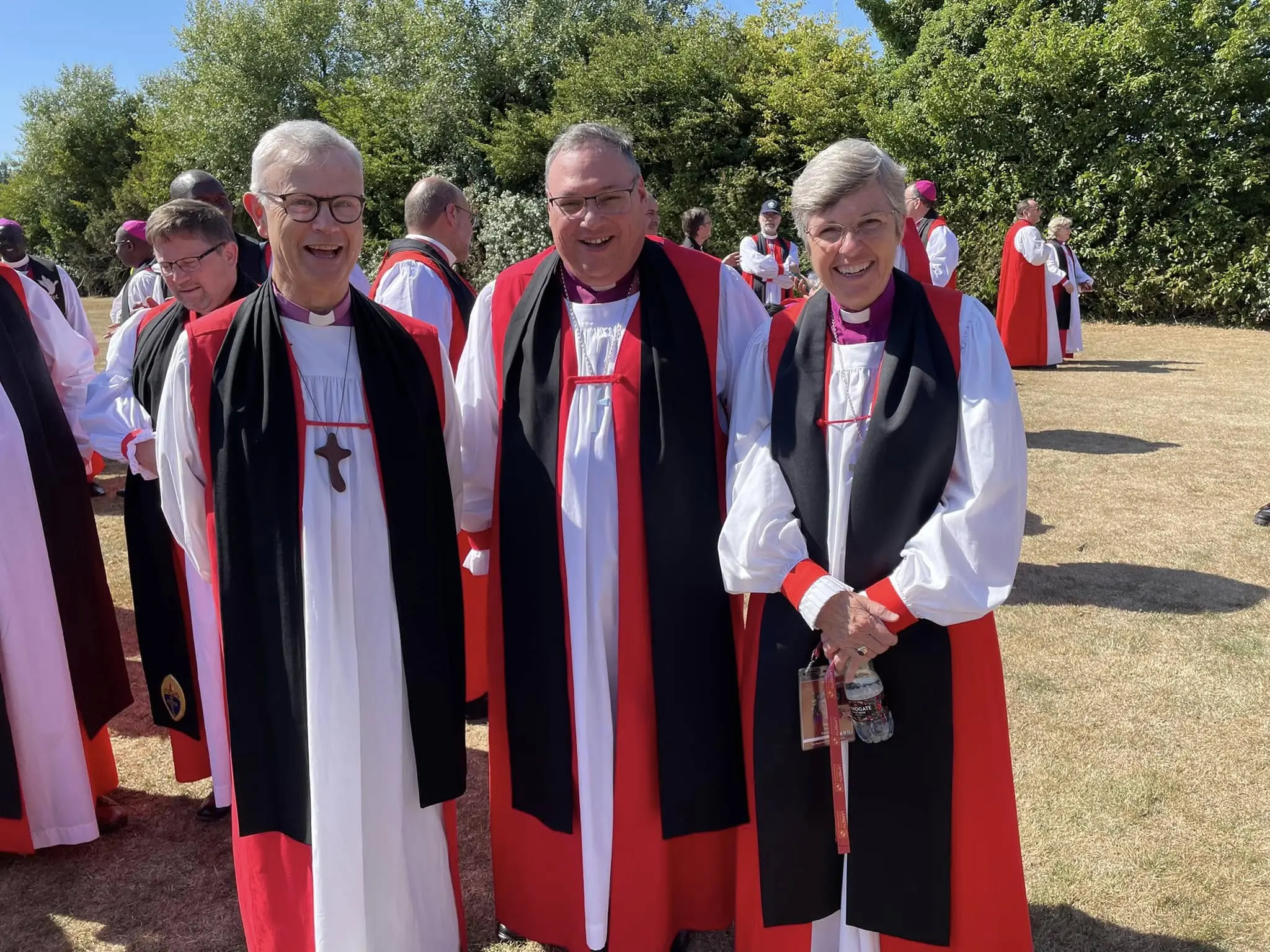
Part of the Lambeth Conference of Anglican Bishops in 2022 was devoted to interfaith dialogue. That conference issued several calls to the church. One of these focussed on our engagement with people of other faiths.
The document recalled the thinking of the 2008 Lambeth Conference. At that time, the bishops, in the spirit of the important Roman Catholic Pastoral Constitution of Vatican II, Nostra Aetate, acknowledged that “As members of the Church of the Triune God, we are to abide among our neighbours of different faiths as signs of God’s presence with them, and we are sent to engage with our neighbours as agents of God’s mission to them”.
We abide among people of different beliefs as a sign of God’s presence, and we engage as God’s ambassadors.
This approach to discipleship builds on the principle in the 2022 call which said, “Whatever our context, our neighbours of other religious traditions are all made in the image of God, and as Christians we are called to love others as ourselves.”
We have significant religious freedom in Australia. This is not enjoyed everywhere across the globe. The 2022 Lambeth call said, “In a world of growing restrictions on religious freedom or belief, there are increasing opportunities for Christians to work with members of other religious traditions in common cause of defence of these freedoms, including the freedom to change one’s religion or belief, and in mutual advocacy.”
We are then invited to prayer “for the suffering persecuted church in its efforts to continuing to be a gentle and faithful witnessing presence even in the face of hostility and the struggle to form strong relationships with neighbours of other faiths.”
Abiding among and engaging with people who hold different worldviews is a holy action of generous love.
Grace and peace,
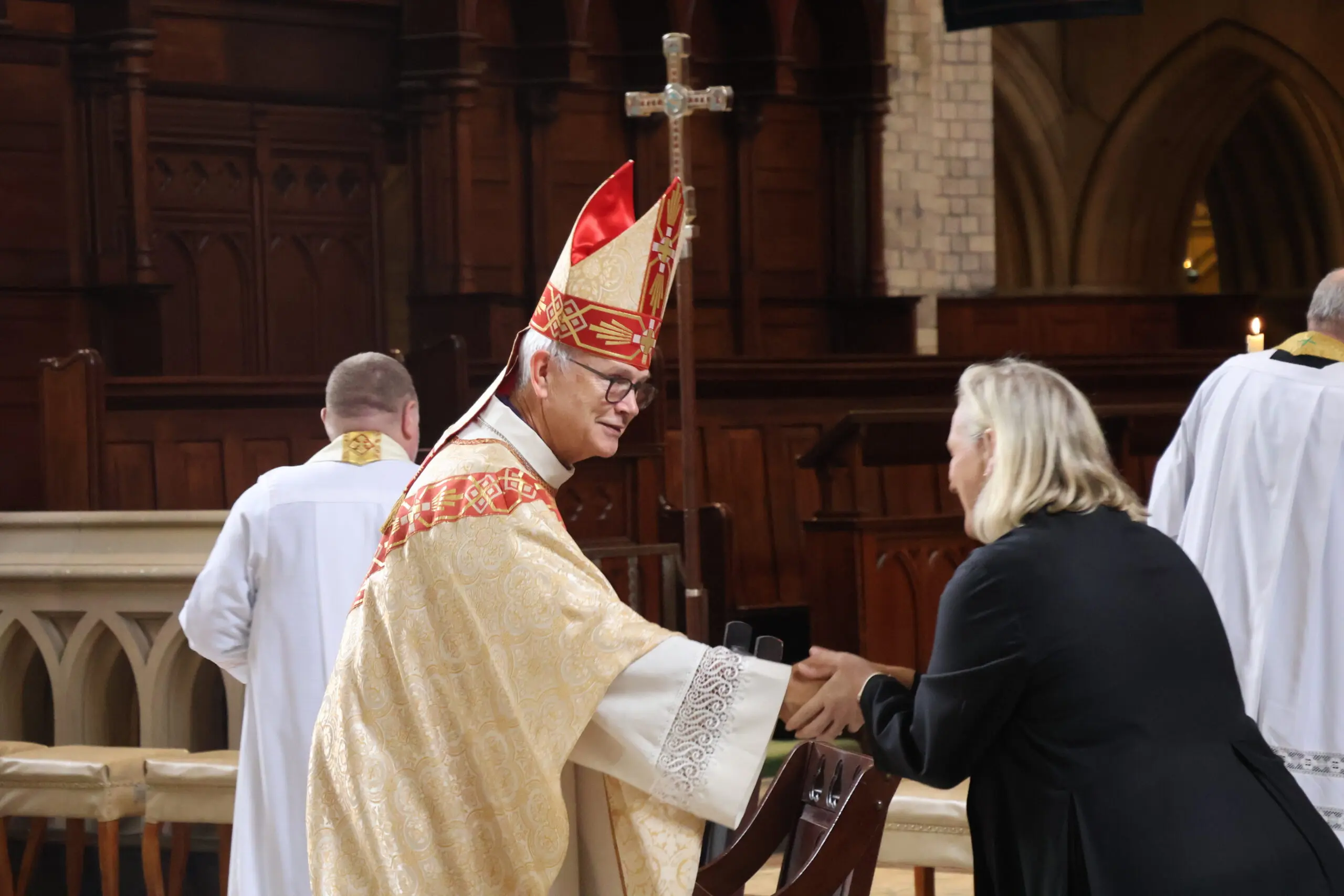
Bishop Peter Stuart
Anglican Bishop of Newcastle
Bible reflection: John 10:16

By Father Rod
OK, I admit it!
Sometimes when I am having trouble kick starting a thought process, I’ll put a text into Google. I also admit that I’m not very skilled on a keyboard.
So, in a clumsy attempt to search John 10:16, I simply typed in the numerals 10:16 without the John and discovered that these digits were the name of a song by heavy metal band Spiritbox; and down the rabbit hole I went.
Now, I am by no means a heavy metal fan and about five seconds of Spiritbox was about four seconds too long, but in the process of extricating myself from this particular rabbit hole I stumbled across another Spiritbox song, The Beauty of Suffering.
The accompanying commentary on this song (which was helpful because I couldn’t understand the vocals) informed me that the lyrics explore the psychological pain of conforming, wearing a mask, or changing oneself to satisfy someone else’s expectations. I began to wonder; was this an insight into what Jesus meant when he said “I have other sheep that are not of this sheep pen. I must bring them also. They too will listen to my voice, and there shall be one flock and one shepherd.” John 10:16.
Jesus is speaking into the domination system of his day. It’s easy to work out what a particular domination system is by observing the make up of the vast majority of political, business, and religious leaders in any given culture.
A domination system will always make belonging conditional on “fitting in”, conforming, and compliance. A domination system will always interpret phrases like “one flock and one shepherd” through its own unique lense. Jesus’ qualifying words in the beginning of the verse disrupts the natural processes of the system, and the system doesn’t like it as evidenced in John 10:20 “Many of them were saying, ‘he has a demon and is out of his mind’”.
Throughout the Bible there runs a tension between two modes of being, exclusion and inclusion, what Walter Brueggemann calls the texts of rigor and the texts of welcome. The reason it runs through the Bible is that the very same tension runs through every human society. Who to include and who to exclude is the deeper issue the lies at the heart of the question, “Who is my neighbour?”
In a 2022 article Brueggemann writes, “We are, for now, deeply situated in a crisis of the other. We face folk who are quite unlike us, and their presence among us is inescapable. We are no longer able to live our lives in a homogenous community of culture-related “look alikes.” There are, to be sure, many reasons for this new social reality: global trade, easier mobility, electronic communication and mass migrations among them.
We are thus required to come to terms with the “other,” who disturbs our reductionist management of life through sameness. We have a fairly simple choice that can refer to the other as a threat, a rival enemy, a competitor, or we may take the other as a neighbour. The facts on the ground are always complex, but the simple human realities with each other are not so complex.”
From the very beginning the Christian community has been challenged to include rather than exclude. The challenge began with the gentiles, and it continues today. Perhaps the ultimate challenge may be to choose God’s kingdom over our particular view of sacred community.
Brueggemann goes on to warn, “The new thing emerging among us is a multi-ethnic, multicultural, multi-racial, multi-gendered culture in which old privileges and positions of power are placed in deep jeopardy.” To some ears, that could sound a bit like the kingdom.
Although I do wonder if the commentary on Spiritbox’s “The Beauty of Suffering” may also be prophetic.
Because being made to fit in by being forced to wear a mask or having to change the essence of oneself to satisfy someone else’s expectations, is a cause of psychological pain. It is spiritual abuse and cannot possibly be an instrument of the Kingdom of God.
When we hear Jesus say, “I have other sheep that do not belong to this fold. I must bring them also, and they will listen to my voice. So, there will be one flock, one shepherd.” John 10:16.
We can interpret his words through our own domination system, or we can wonder who we may welcome and how they may change us in our ever-transforming journey into the Kingdom of God.
Prayer Teaching

By Rev’d Canon Dr Christy Capper
Sometimes prayer just bubbles up, and sometimes it comes, as Paul says, in groans that words cannot express. Sometimes there is less of an issue of finding things to pray for and more of an issue with there being so many things to pray for, we can be overwhelmed with the needs of the world.
Just as there are different sheep from different pastures, so too are there many different to pray. Sometimes we can feel that we need to pray in a certain way to be praying “properly” but God hears our sighs, our groans, our tears, our joys and our worries – however we pray. The key thing is that we pray, that we bring to God our cares and concerns, whether in words, groans, sighs, silence, art, dance or song we can pour out our concerns before God, because God cares for us.
Help us build the community

We would love to hear your stories of prayer. Please send them to [email protected]